Descending 101

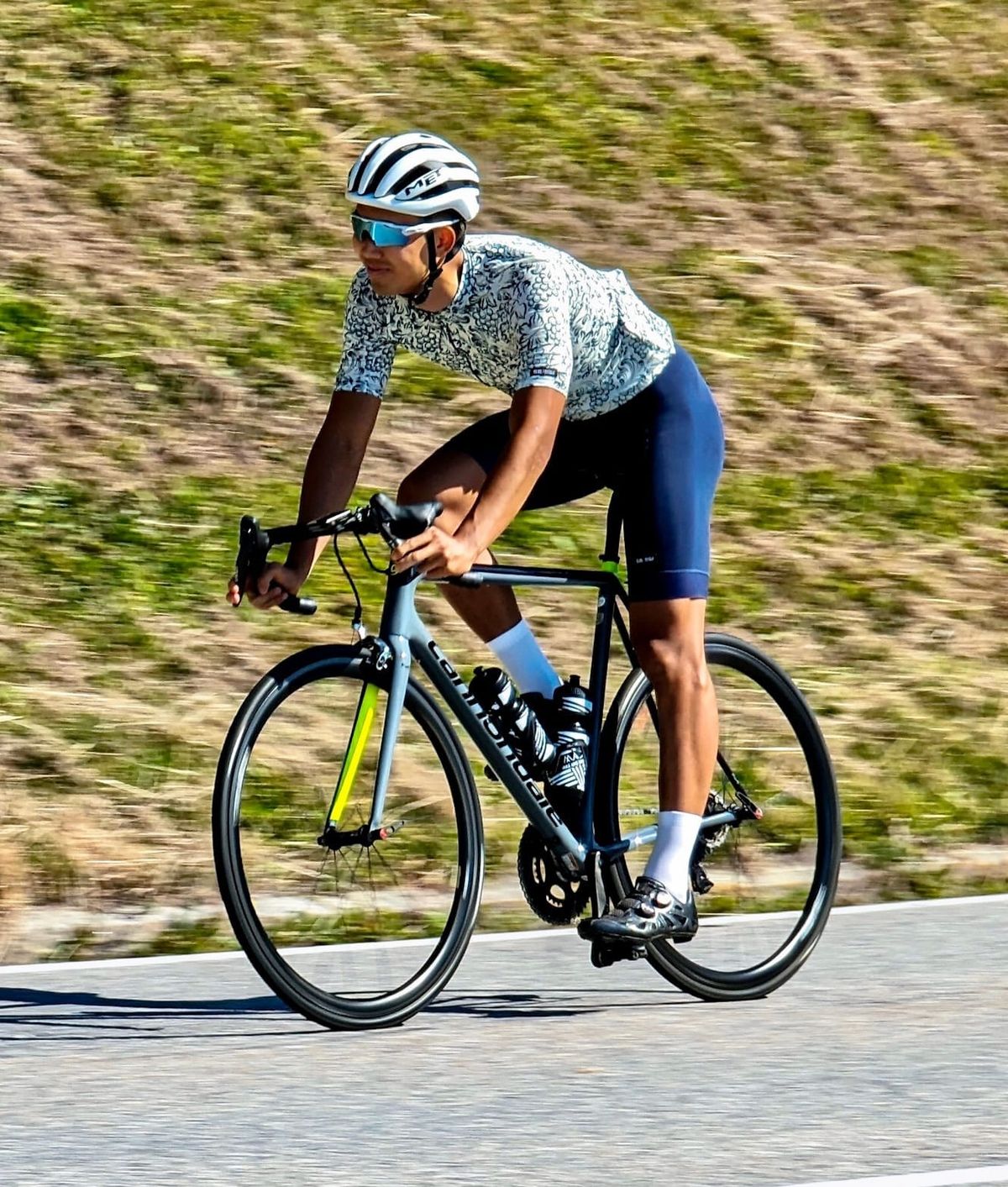
I will be the first to admit that I am not the fastest descender. Race situations are of course different, but after many high-speed crashes, the descending risks in training with roads that are not closed are simply not worth it to me. However, what goes up must always come down, and descending safely and efficiently is one of the most important components of being a well-rounded cyclist.
Fast descending is a combination of both skill and risk. In my opinion, skill far outweighs risk in any descending situation. The best descenders are able to make split second decisions in highly stressful descending situations, as well as predict where the road is going at extremely high-speeds. This can only be achieved by a strong foundation in descending skills, and cannot simply be achieved by taking risks in the descents. As a result, I would like to share my top descending tips that are the foundation of descending in any situation.
- Brake before the corner and not in the corner
When it comes to descending, smooth is fast. Therefore, it is recommended to do all the braking before reaching the corner and avoid braking in the corner. This technique maximizes the exit speed from the apex of the corner, which is where descenders often lose the most time. Depending on how sharp the corner is, you can brake earlier or later. As mentioned before, the best descenders are able to predict where the road is going and how sharp the corners are. As a result, really good descenders are able to brake as late as possible, while carrying as much speed into the apex to maximize the exit speed.
- Create a force in the x-y direction through the bike in the corner
So what is the best technique once you have reached the corner? Quite simply, the best technique is to always put force into the outside pedal and also apply force through the inner hand of the handlebar. As an engineer, I like to think of applying a force in the x-y direction through the bike. For example, if a left corner is approaching the goal is to simultaneously put force into the right pedal and left side of the handlebar. My tip is to step down on the outside pedal so hard that your butt lifts off the saddle. At best, I also recommend sitting further back on the saddle and leaning the inner leg at a 45 degree angle into very sharp corners.
It is also important to note that in a bike system the rider outweighs the bike. As a result, it is important to manipulate the bike in the corner and not your body! While descending, try to keep your upper-body as square and upright as possible, while just emitting force through the bike in the legs and the hands. For example, this approach is much different for a motorcycle system where the motorcycle far outweighs the rider. If you have watched Moto GP or any motorcyclist, we can observe that they manipulate their body rather than their heavier motorcycles.
- Vision and using as much road as possible
I think vision is one of the most important components of descending. My tip is to always have the eyes up and looking towards the apex of each corner. When a descender is scared or nervous, the immediate reaction is to look just ~5 meters up the road. This reaction often times creates an even more nervous situation on the bike. As a result, I think this is the number one mistake a beginner cyclist can make when first starting to descend super steep roads or Alpine Passes. Try to overcome the immediate reaction of looking down and keep the eyes up whilst descending.
Using as much road as possible is also important in regards to descending efficiently. This is much harder on open roads, but the approach is always the same. The optimal descending line in any corner is always the line from the very outside of the road at the furthest point in the apex. Turning at the latest point in the apex of the corner maximizes speed and efficiency in the descents.