Chain Efficiency and Longevity

The bike chain is often times an overlooked component of the bike. A cyclist can easily lose 3-4 watts of chain efficiency based on the type of chain being used on the bike. [1] Furthermore, a worn chain can also cause massive efficiency losses in the drivetrain and simultaneously wear down the cassette and chain rings. In this Article, we will discuss how to maximize chain drivetrain efficiency, and also provide the most efficient chains available on the market today.
The data for this Article is provided by Zero Friction Cycling, who are an independent test facility for lubricant and chain performance based in Australia. Zero Friction Cycling has conducted over 300.000 km of controlled testing to find the most efficient chains on the market today. [2] Ceramic Speed has also done extensive testing on chain longevity and efficiency. Their data is also shared below.
Chain Efficiency and Longevity Testing at Zero Friction Cycling are divided into six blocks of 1000 km each. Each block simulates different riding conditions and contamination levels. (Ex: Dry riding, Wet riding, Dry contaminated chain, etc) The goal is to measure how quickly the chain reaches the wear limit of 0,5% elongation. (A high-quality chain can generally withstand Blocks 1 -5 or 5000 km without reaching 0,5% elongation.) The results provided are the following:
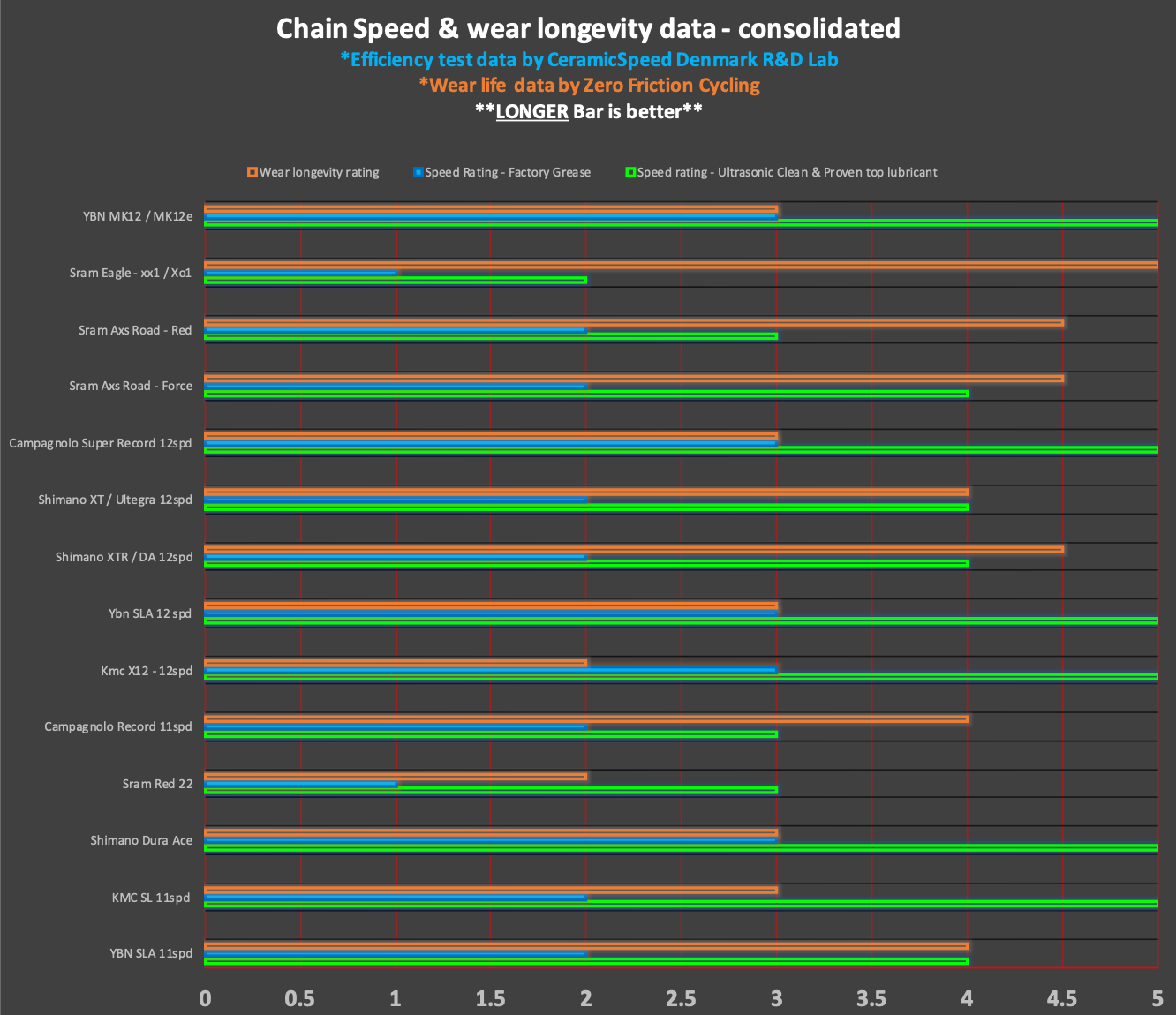
The graph above shows chain efficiency data represented by the green bar. It is also important to note that the orange bar displays the chain longevity rating. Based upon the data from Zero Friction Cycling, we can conclude the following:
- Shimano Users
- The fastest chains for cyclists using Dura-Ace, Ultegra, or 105 are the following: YBN MK12, Shimano XTR/Dura-Ace, YBN SLA, or the KMC X12
- SRAM Users
- The fastest chains for cyclists using RED, Force, or Rival are the following: KMC X12 "Flat" Chain, YBN MK12 "Flat" chain, or Sram Force
The next graph below provides a deeper analysis of chain longevity and wear. Specifically, the Y-Axis displays the amount of kilometers each chain takes to reach 0,5% wear.